Asad Hussein, a student on the MA in Global Financial Journalism programme at City St George’s, University of London, recently took part in the Marjorie Deane Summer School in Singapore.
The summer school, funded by the Marjorie Deane Financial Journalism Foundation, gives aspiring financial journalists the opportunity to learn from leading journalists, economists and financial institutions while developing their understanding of international business and trade.
Asad writes about his time in Singapore:
A Letter from Singapore
Singapore teaches by simply being itself. As you land at Changi, the first thing you notice is the airport’s name written into the ground in green. The next is that immigration is faster than almost anywhere else, largely because you do not meet a human being, though officers stand by in case the machinery fails. The whole process has been automated. You submit a form before arrival and swipe your passport at a machine, as you might tap a card at work in the morning. And just like that, the country is yours.
The green, too, is part of the pitch. Under rules requiring buildings to incorporate greenery, almost every high-rise seems to rise out of foliage. Sometimes the grass is on the roof, sometimes on the sides, sometimes spilling from a window. The result is a civilisation in a forest. It gives high-rises, usually soulless things, something like a soul.

It also says something larger about Singapore’s character: the city-state tries to legislate its way out of every problem. Worried about young people becoming addicted to smoking? Ban vapes. Terrified of hard drugs on the streets? Keep the death penalty. People spitting on pavements or eating on trains? Fine them.
This generally works. At times, as with the government’s attempts to reverse falling birth rates by encouraging dating, it can seem absurd. But more often than not, it works.
In a world in which old rules are being renegotiated and uncertainty reigns, Singapore has emerged as a model for other countries. In Africa, Rwanda’s Paul Kagame has long wanted to turn his country into a Singapore of sorts. Kenya’s William Ruto regularly talks of doing the same. Even in Britain, which once ruled Singapore as a colony, there were whispers after Brexit of a “Singapore-on-Thames”.
Those whispers grew louder after Donald Trump’s attacks on global trade. Singapore, ever a stickler for rules, became an advocate for the trade order that had helped set it on the path to the first world. With little capital beyond its people, trade was the secret of its rapid ascent.
As business journalists, we had come to watch that engine at work. There has been no better time to study trade. Free trade was once accepted as an engine of progress. Now, as America weaponises its market, the old rules seem suddenly absurd, and the world appears to be on the brink of a new order.
For storytellers, chronicling this rupture, as Canada’s Mark Carney has called it, is thrilling. And there was no better place to do so than Singapore: itself a product of the old world, and a place where the currents of whatever comes next will be felt early.
Singapore is small, but its first two official languages are those of the superpowers: Chinese, thanks to the merchants who settled here, and English, thanks to its colonial history. It can speak to both worlds. Yet it fears it may be crushed by them. That fear is too overbearing to be named directly and so is often discussed in euphemisms. It is also, increasingly, the world’s fear.
Our first stop, naturally, was the Singapore Exchange, where we took a health check on a country that has, strangely, been doing rather well. Capital, ever anxious about disorder, likes Singapore’s order. We learned how money is being wired into the country, only to leave again almost as quickly as it arrived. But where was this capital going?
At BBC Asia’s newsroom, we found that the same order, the same sterility, that makes Singapore a magnet for capital can make it a difficult place for stories. Journalists often use the city as a satellite from which to cover the rest of Asia.
This is compounded by Singapore’s leaders, who have always understood the power of narrative. The precedent was set by Lee Kuan Yew, who once worked as a stenographer for the Japanese and remained acutely aware of the uses of a story. Even Yusof Ishak, the man on the country’s banknotes and its first president, had been a journalist.
Singapore’s leadership insists on the story of success. Yet that story can bury almost everything else that happens in the state. Even when the success is real, the telling of it can become hollow. Journalism detests boredom as much as capital detests uncertainty.
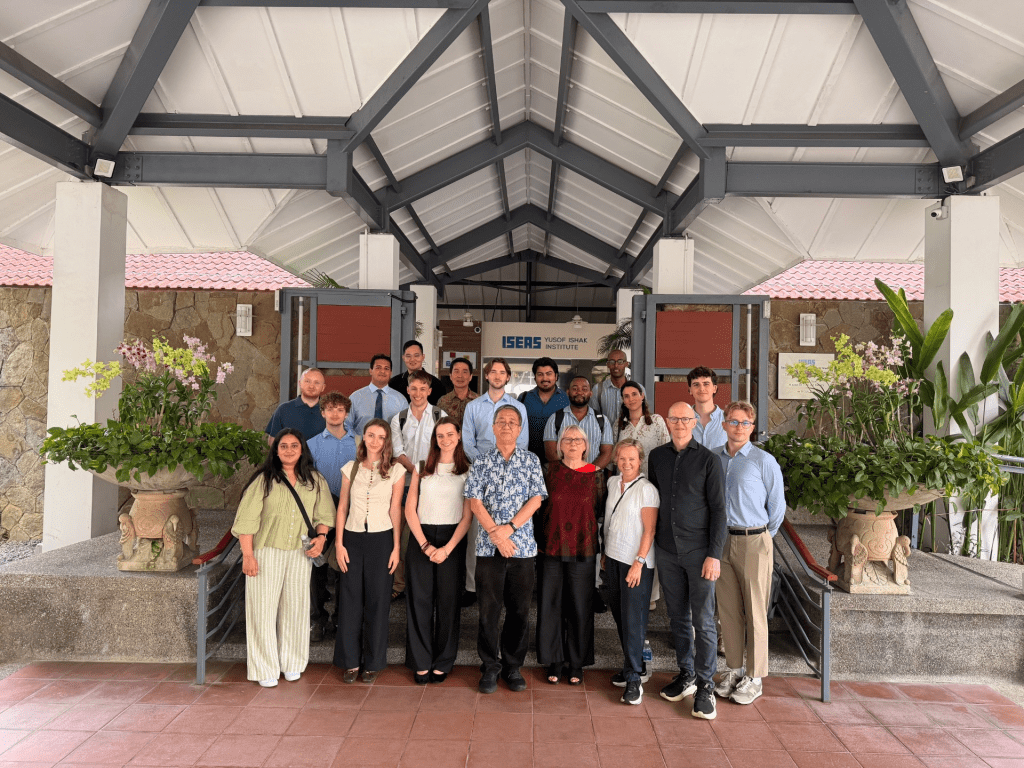
At the Hinrich Foundation and the ISEAS–Yusof Ishak Institute — yes, the same man — we looked beyond Singapore to examine how the rupture is being felt across the region: how Vietnam has benefited from disrupted supply chains; how Indonesia’s Prabowo is courting authoritarianism; how corruption still haunts Malaysia; and what, exactly, Thailand’s royal family is up to these days.
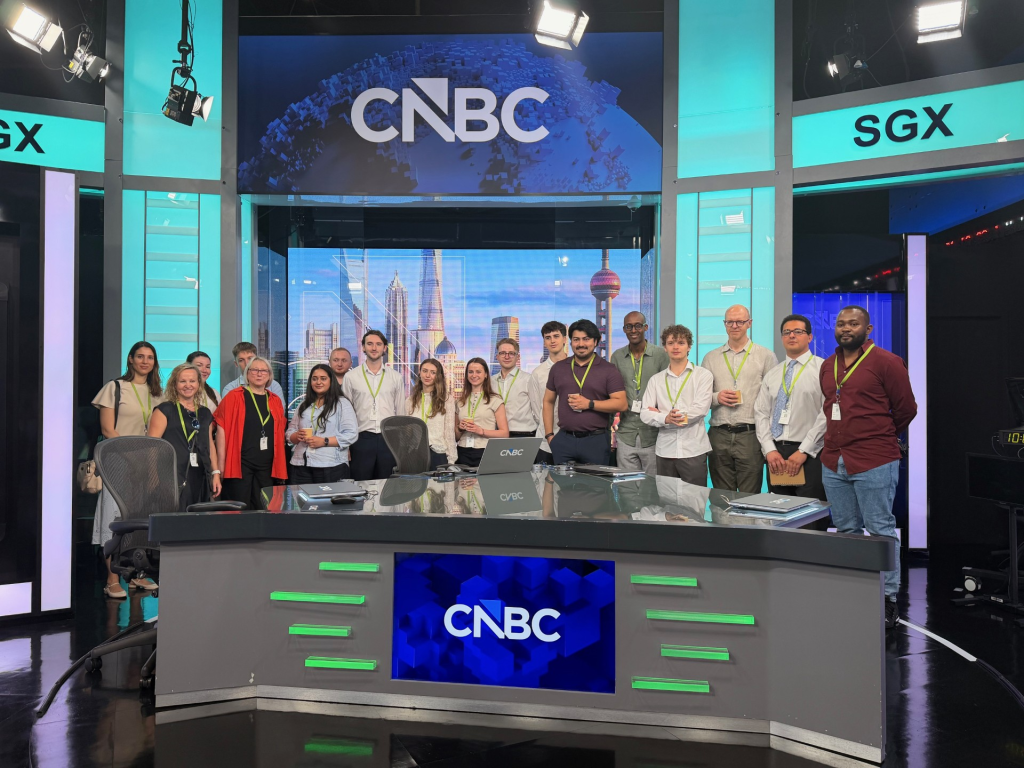
The next day, we put that knowledge to use during a full day with journalists at Bloomberg, where we retraced the pathways of global commodities and rediscovered the peculiarities, and beauty, of writing a story, almost with the same awe with which García Márquez’s Aureliano discovered ice.
At Capital Economics, we pushed farther still, exploring how China’s manufacturing is being hit by disruption and where companies are going instead. Would this have long-term effects for China?
No such conversation, of course, is complete without a rumination on the chip race, and on the disruptions, known and unknown, that artificial intelligence may bring to a world already full of them.
At the Institute of Policy Studies, we returned to Singapore’s success story and to the question of what its future entails. Can it remain a model for others? Can it survive a battle between superpowers, if such a conflict gathers pace? Can it remain neutral?
Selfishly, as an African, I was mesmerised, as many of our leaders are, by how much Singapore has achieved in a single generation. What appealed to me was what others seemed to take for granted: the clean streets, the running trains, the integration of nature into civilisation.
On a stroll through Fort Canning, I noticed how Singapore seemed to embrace all aspects of its history: the colonial buildings, the Malay shrines, the Tamil sacred places. All were accepted without rancour. Every signpost appeared in four languages, an acknowledgement of diversity in a world where diversity is increasingly treated with suspicion.
What sacrifices had all this required? Could it be replicated in Kenya or Somalia, where I trace my heritage?
Seeing it was too dreamlike, too unreal. Sometimes I had to touch the grass to believe it was real, and merely well cared for.
The world needs such care. And as long as Singapore keeps giving it, it will remain a model. Not only for those who dream of growth, but for those who still know how to appreciate the little things in life.